Opinion: Alaska’s wildfire season starts now whether it feels like it or not
This Op-Ed ran in the Anchorage Daily News on April 1, 2026.
Alaska’s spring season varies greatly across the state: from deep snow and below-zero temperatures in Fairbanks and Delta Junction, to clear skies and snowy forecasts in the Yukon-Kuskokwim Delta and Bristol Bay, to ever-present wind advisories in the Mat-Su. No single date signals “spring!” for our communities. With freezing temperatures and the white stuff still covering much of the state, it’s easy to forget wildfire season officially begins on April 1.
Predicting Alaska’s wildfire seasons is a difficult and unforgiving task done by dedicated meteorologists working in partnership with Alaska’s wildfire agencies. With 2026 trending toward a warming El Niño year, it’s possible we could see a big wildfire season. But it’s also possible that below-average lightning predictions in the eastern part of Interior Alaska — most wildfires in the state are caused by lightning — mean we could see a more average wildfire season. Over the past 20 years, Alaska averages about 1 million acres burned. For those who remember the harrowing 2004 wildfire season, another El Niño season, more than 6 million acres burned, roughly the size of Rhode Island.
It may not be possible to predict Alaska’s wildfire seasons with 100% accuracy, but we do know the most effective ways for individual homeowners to reduce wildfire risks, no matter where they live in the state.
First: Be prepared
Home hardening, also sometimes referred to as Firewise, means taking steps to remove flammable materials from around a home to create defensible spaces where firefighters can work effectively to protect the home in the event of a wildfire. This greatly reduces the risk of wildfire to not only a home, but neighbors’ homes and the broader community. Many Alaskans live in fire-dependent ecosystems, meaning fire is a natural part of the landscape, including black spruce. What is changing is the intensity and frequency of wildfires in these ecosystems, while they are also expanding into previously less fire prone areas like tundra. Changing vegetation, including more grass surrounding communities, is also increasing wildfire risk. Rather than completely eliminating all wildfire, communities must adapt to fire. Hardening homes to withstand wildfire and reduce structure fire impacts builds individual and community resilience.
Second: Be aware
Before and during wildfire season, be aware of weather forecasts, and new and ongoing wildfires in the area. Also plan to improve indoor air quality before a wildfire happens. In 2025, Fairbanks experienced an unprecedented fourth year in a row with more than 100 hours of reduced visibility due to wildfire smoke at the Fairbanks International Airport. Purple air quality monitors help determine when air is unsafe, especially for children, elders and those with asthma and other lung conditions. When air quality is unsafe, air filtration systems can greatly reduce harmful air inside homes, schools and other buildings.
Third: Have a plan
Sometimes even after home hardening and improving indoor air quality, the safest action to take when available is to evacuate. Planning now, while snow and ice make wildfire season seem far away, is the best time to put together and practice emergency plans. This includes discussing emergency shelter options, both in the community and after evacuation, planning routes and gathering important items for emergency go bags.
For evacuations in Alaska, agencies use Ready, Set, Go, a way for fire agencies to communicate with the public. “Ready” means preparing for wildfires in the future. “Set” means preparing a home and family to evacuate soon when a wildfire comes near. “Go” means leaving immediately when a nearby wildfire makes it too dangerous to remain at home. The state of Alaska Division of Forestry and Fire Protection and the Municipality of Anchorage have Ready, Set, Go information.
Alaskans are resourceful and care deeply for their communities. Relearning how to live with and become more fully fire adapted will take everyone working together. Use these low spring temperatures to work on prevention now before wildfire season is in full swing. Soon enough, Alaskans will be harvesting fish, hiking and camping, and enjoying all that daylight.
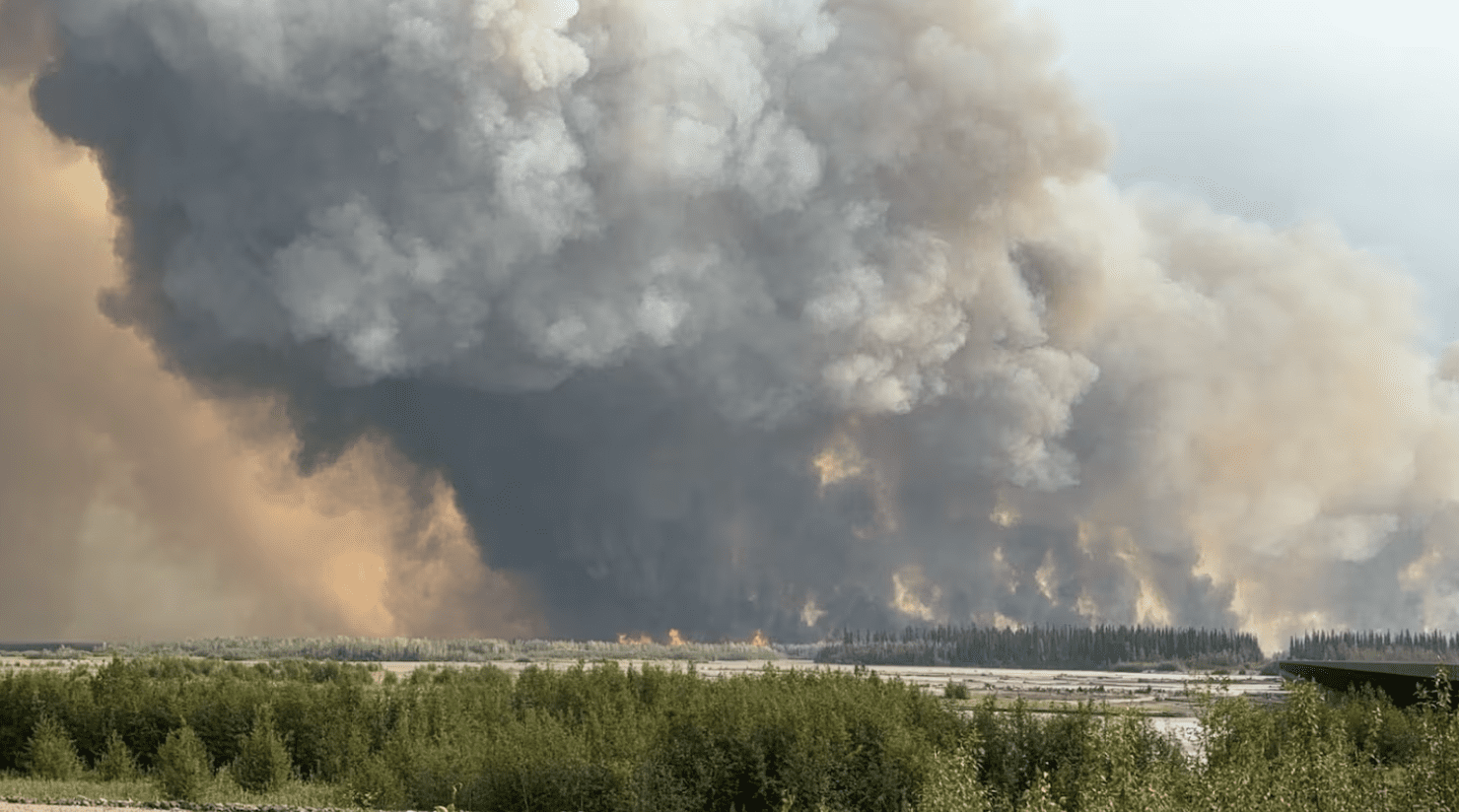
CREDITS: Words by Jeff Ennenga and Kenni Psenak. Photo by Tia Wiese/BLM Alaska Fire Service of the McDonald Fire, which burned in the summer of 2024 and was the largest within the Fairbanks North Star Borough since 2004.